

Ultrasonic Vinyl Record Cleaning
What is?
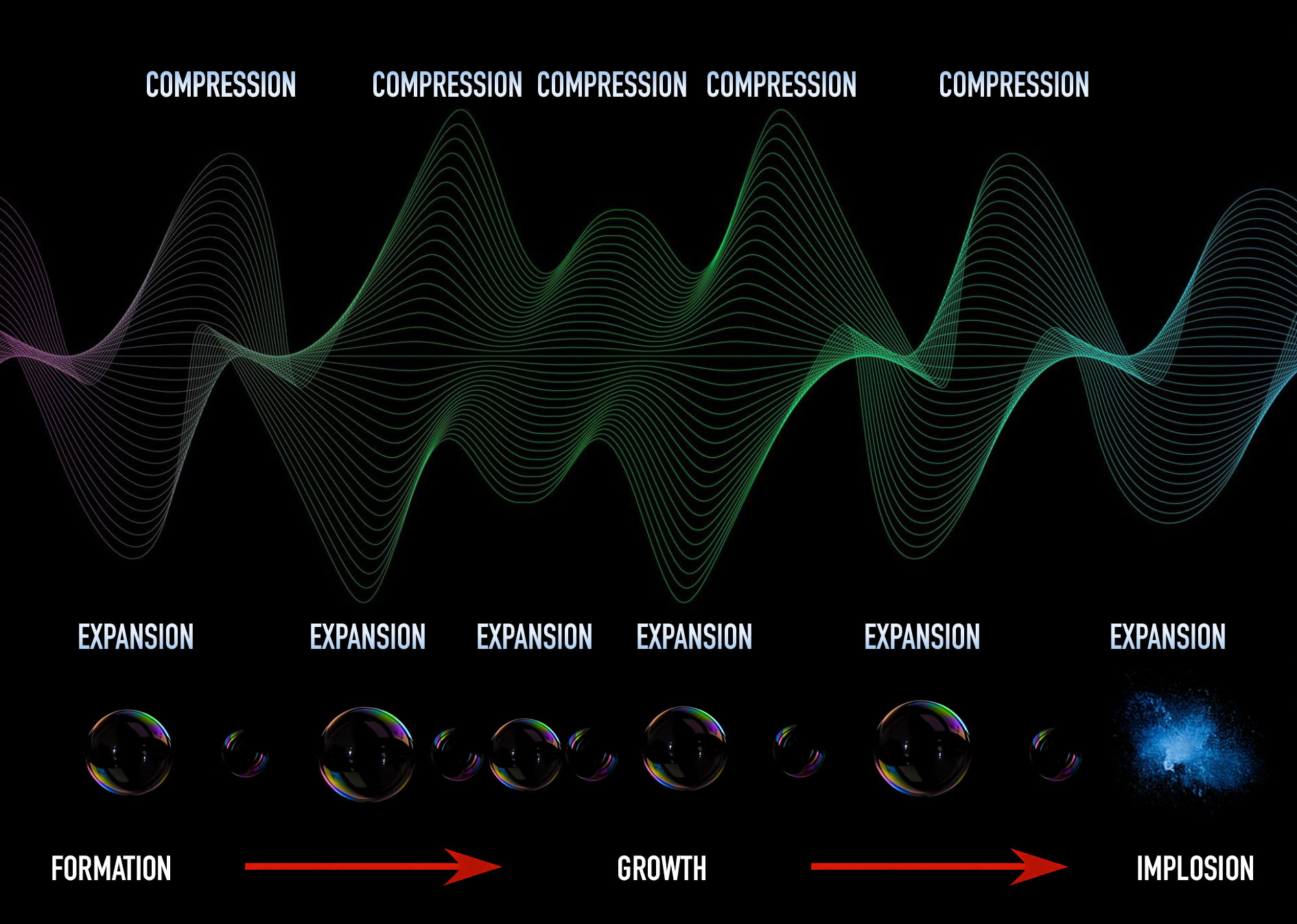
It is a process that uses high-frequency sound waves in a liquid to generate a phenomenon called cavitation, where small bubbles (1 to 100 micrometers in diameter) are formed. These bubbles collapse upon contact with the vinyl, creating tiny explosions that gently remove dust and dirt from the grooves, improving sound quality without damaging the record.
An audio explanation by NotebookLM (Available in English only):
Advantages of ultrasonic record cleaning
More effective
- Loose dust and dirt: Ultrasonics are excellent at removing fine dust and dirt that accumulate in the grooves of vinyl records. The bubbles generated by ultrasonic waves reach deep into the grooves of the disc, lifting particles that could affect sound quality.
- Pressing residues: New records sometimes still contain residues from the manufacturing process, such as lubricants or microscopic vinyl particles. Ultrasonic cleaning can help eliminate these residues, improving clarity and reducing unwanted noise.
- Inorganic particles: Ultrasonic technology is effective against inorganic particles, such as mineral dust, sand, or small metallic fragments that may have accumulated on the record. These particles can be challenging to remove with traditional methods, but ultrasonics dissolve or lift them from the grooves.
- Embedded dirt and grime: Over time, vinyl records can accumulate embedded grime, especially if they have been frequently handled. Ultrasonic cleaning penetrates the deepest grooves, removing dirt that has been lodged for years and significantly improving sound quality.
- Previous cleaning residues: If the record has been previously cleaned using other methods, such as liquid cleaners that leave residues, ultrasonic cleaning is highly effective at removing these remnants. Any leftover cleaning products can be dissolved with ultrasonics, leaving the record cleaner than before.
Less effective
- Grease or oil stains: Ultrasonic cleaning is not very effective at dissolving grease or oil stains (including fingerprints) without the prior use of a cleaning solution.
- Mold or organic residues: While ultrasonic cleaning can partially clean these residues, it is less effective without pre-cleaning using an enzymatic cleaner or a specific mold cleaner.
- Adhesive or label residues: If the vinyl had labels or stickers, sticky residues are not fully removed with ultrasonic cleaning.
- Embedded dust and surface wear: Sometimes dirt has been on the vinyl for so long that it has “fused” with the material or caused surface wear, which cannot be restored by any cleaning method.
Limitations
- Does not repair damaged or scratched records: While it can improve sound quality by removing dirt, it cannot repair damaged grooves or fill in scratches. The purpose of ultrasonic cleaning is to clean, not to physically restore the vinyl.
- Does not remove residues from chemical damage. If the vinyl has suffered chemical damage or poor storage conditions, ultrasonic cleaning cannot reverse these effects. It only removes surface contaminants and does not alter the vinyl’s chemical structure.
Ultrasonic Record Cleaning Prices
| Quantity | Price |
|---|---|
| From 1 to 5 records | $9.00 |
| From 6 to 10 records | $16.50 |
| Each set of 1 to 5 records after 10 units | $8.00 |
Applies to any record size as long as the spindle hole is the same size. Keep in mind that records with small spindle holes cannot be mixed with records that have large spindle holes. For example, there are 7”, 10”, and 12” records with small spindle holes, and in those cases, sizes can be combined. However, 7” records with a large spindle hole can only be combined with other 7” records that have the same spindle hole size.
Additional Items
| Item | Price |
|---|---|
| Anti-static HDPE inner sleeve (12") | $0.34 |
| MoFi inner sleeve (12") | $1.00 |
| Paper inner sleeve (7") | $0.73 |
| Vinyl cleaning solution 120ml | $4.50 |
| Vinyl cleaning solution 250ml | $9.00 |